

“Tra l’animazione paesana e laboriosa della via passava la carrozza sfiorando le file dei carri fermi dinanzi ai pastifici. Gli stabilimenti si susseguivano a breve distanza, senza avere all’esterno niente della fabbrica, uguali alle altre case, con bei balconi e cornici di piperno. Differenti però dalle abitazioni civili per i portoni spalancati su androni vastissimi zeppi di sacchi e per la pasta stesa che danzava intorno ai caseggiati.”
“Amid the lively, bustling animation of the street, the carriage went by, brushing against the rows of carts halted in front of the pasta factories. The establishments followed one another at short intervals, showing nothing outwardly of a factory, identical to the other houses, with handsome balconies and piperno cornices. Yet they differed from ordinary dwellings in their wide-open gateways leading into vast halls crammed with sacks, and in the pasta spread out to dry, dancing around the buildings.”
Maria Orsini Natale
“Francesca e Nunziata” (Sellerio)
La pasta
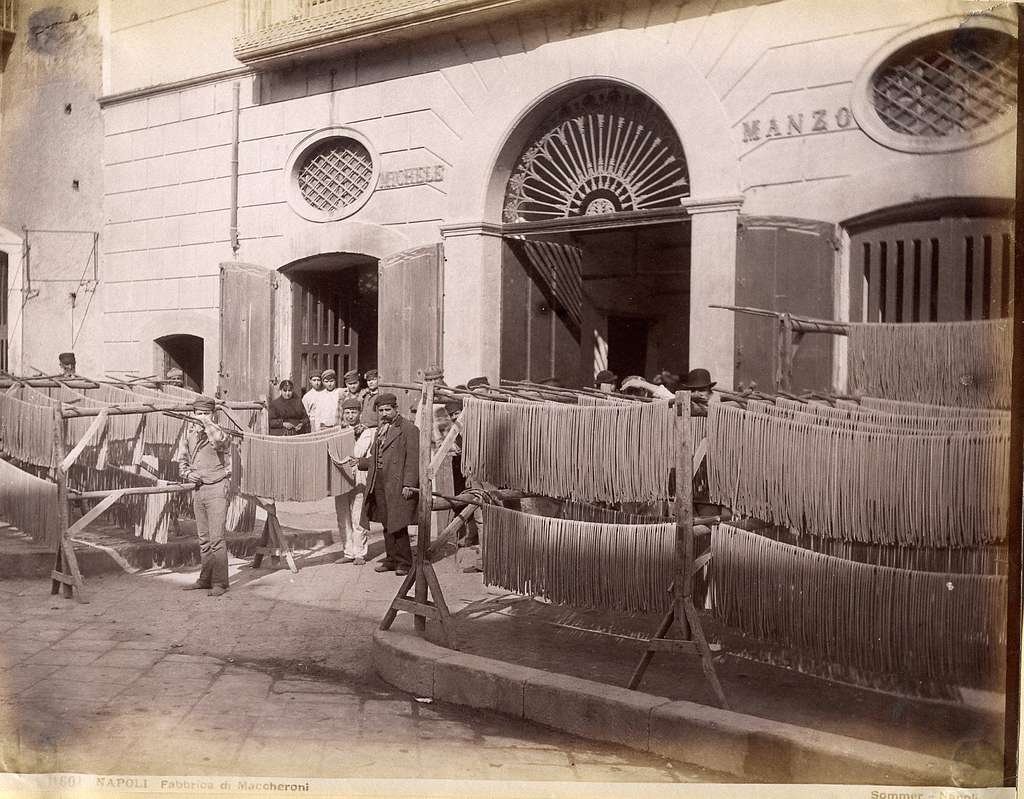
A Torre Annunziata la pasta non era un prodotto. Era un’abitudine del vento. Cresceva all’aria come panni stesi. La vedevi in cortile, su canne e telai, in bande chiare. Sapeva di sale portato dalla marina e di farina che si appiccica alle dita. Il Vesuvio la guardava da lontano, con la sua calma finta. Qui si è imparato a impastare la pazienza. Il grano arrivava a sacchi, a spalla, a voce bassa. L’acqua veniva dal Sarno e da canali che hanno insegnato il corso anche agli uomini. Il mestiere si imparava come una preghiera breve: farina, acqua, mani, respiro. Non servivano molte parole. Bastava la temperatura della stanza, l’umidità in gola, ’o viento che entrava dalla bocca del portone. Chi cresce vicino al mare sa quando cambiano le correnti. Chi cresce in mezzo alla pasta lo sente anche a occhi chiusi. Le donne sorvegliavano l’asciugatura come si guarda un figlio dormire. Gli uomini pesavano la semola, controllavano il bronzo delle trafile. I bambini passavano di corsa, rubavano un filo, lo spezzavano con i denti per sentire se “cantava”. ’A pasta teneva ’a voce sua. Poteva essere ruvida, poteva essere docile. Dipendeva dai giorni. Da un colpo di tramontana. Da una nuvola.
Pasta
In Torre Annunziata, pasta wasn’t a product. It was a habit of the wind. It grew in the open air like laundry on the line. You saw it in courtyards, on canes and frames, in pale bands. It tasted of salt carried in from the harbor and of flour that clings to the fingers. Vesuvius watched it from a distance with its feigned calm. Here people learned to knead patience. The grain arrived in sacks, on shoulders, in hushed voices. The water came from the Sarno and from canals that taught even men how to keep a course. The craft was learned like a short prayer: flour, water, hands, breath. Few words were needed. The room’s temperature was enough, the damp in your throat, the wind slipping in through the mouth of the doorway. Those raised by the sea know when the currents change. Those raised among pasta feel it even with their eyes closed. Women kept watch over the drying as one watches a sleeping child. Men weighed the semolina, checked the bronze of the dies. Children ran past, stole a strand, snapped it with their teeth to hear if it “sang.” Pasta had a voice of its own. It could be rough; it could be docile. It depended on the day. On a blast of north wind. On a cloud.
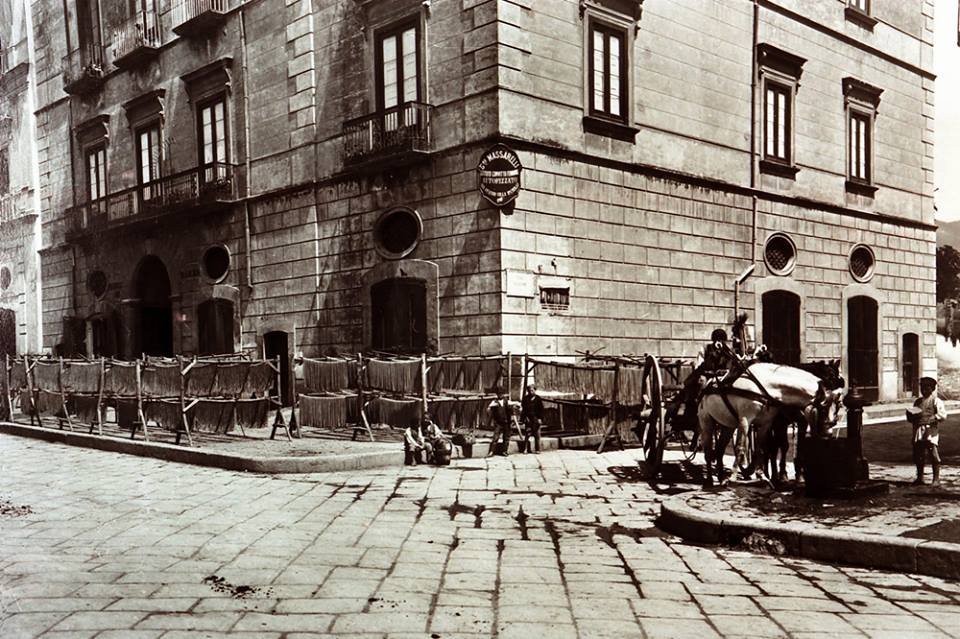
La città era un corpo unico con le sue fabbriche. Case, cortili, capannoni, tutti in continuità. Il porto respirava con loro. Le rotaie portavano via casse a destinazione. La stazione conosceva l’odore del frumento. C’erano mattine di sole di stagno, quando tutto sembrava fermo e invece le mani lavoravano più svelte. C’erano giorni di scirocco in cui la pasta chiedeva più spazio, più tempo. Si faceva silenzio. Si aspettava. Il mestiere è la misura dell’attesa. Di questa disciplina senza proclami è fatta la memoria. Qui “arte bianca” non è un nome nobile. È una faccenda di polvere addosso. La chiamata alla fatica suonava prima dell’alba. La si sentiva nelle caviglie. C’era più religione in quell’ora che alla messa delle nove. Non per bestemmia, ma perché ogni impasto aveva qualcosa di sacro: un patto tra chi lavora e chi mangerà. Poi arrivarono le macchine a dire tempi più stretti, igiene più certa, quantità più grandi. La città imparò un nuovo passo. Alcuni portoni si chiusero. Furono smontati i telai. Le strade persero la vista della pasta all’aria. Restarono cartelli scoloriti, insegne con lettere cadute. La voce dei vecchi, nelle sere, riempiva gli spazi rimasti: “Quanno s’asciuttava ’a pasta, pareva neve d’estate”. Non era nostalgia, era esattezza di cronaca. Qualcuno resistette. Si tenne stretto il bronzo. Non rinunciò alla ruvidità, a quella presa che stringe il sugo come una mano prende un’altra mano. Non fu eroismo. Fu ostinazione da paese di confine: tra mare e vulcano non c’è posto per i mezzi caratteri. O si tiene la rotta o si è spostati via. La pasta, in pochi luoghi come qui, è una biografia collettiva: impastata da generazioni, riformata dalle crisi, salvata da chi non ha voluto cambiare mestiere quando tutto consigliava di farlo.
The city was one body with its factories. Houses, courtyards, sheds, all in continuity. The port breathed with them. The rails carried boxes off to their destinations. The station knew the smell of wheat. There were mornings of pewter sun when everything seemed still and yet hands worked faster. There were sirocco days when the pasta asked for more space, more time. Silence settled. People waited. The craft is the measure of waiting. Memory here is made of this discipline without proclamations. “Arte bianca” is not a noble label. It’s a matter of dust on your clothes. The call to toil sounded before dawn. You felt it in your ankles. There was more religion in that hour than at nine o’clock Mass. Not in blasphemy, but because every dough contained something sacred: a pact between those who work and those who will eat. Then the machines arrived, imposing tighter schedules, surer hygiene, larger quantities. The city learned a new step. Some gates were shut. The frames were dismantled. The streets lost the sight of pasta in the open air. Faded signs remained, names with missing letters. In the evenings the voices of the old filled the spaces left behind: “When the pasta dried, it looked like summer snow.” It wasn’t nostalgia; it was the exactness of the record. Some held out. They held fast to bronze. They did not give up roughness, that grip that holds the sauce the way one hand holds another. It wasn’t heroism. It was the stubbornness of a border town: between sea and volcano there is no room for half measures. In few places as here, pasta is a collective biography: kneaded by generations, reshaped by crises, saved by those who refused to change trades when everything advised it.
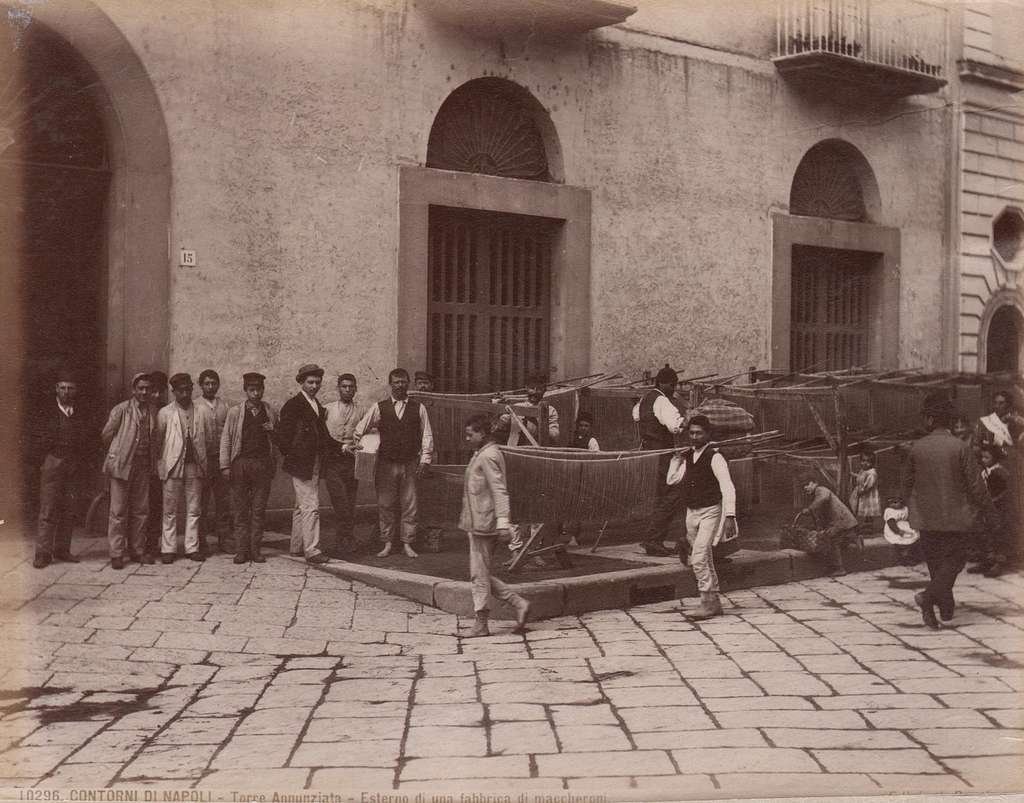
Oggi Torre Annunziata porta ancora addosso il segno dei mulini, anche dove non si vedono più. È nelle parole. Quando dici “passata di pomodoro” qui senti un’altra consonanza. Quando dici “cottura”, vedi il gesto di chi assaggia e non parla. ’A pasta nun è ’na cosa morta. Campa del tempo che le dai. Si fa alla luce di quello che sei. Se sbagli, te lo dice senza insultarti. Non è un giudice, è un maestro breve.Il Vesuvio sta di fronte, come un padre severo. Non chiede niente, ma pretende misura. La città gli risponde con una liturgia terrestre. Farina e acqua. Lavoro. Pane e pasta. La festa, quando capita, arriva dopo, a sera. Prima vengono i turni, la manutenzione, i conti stretti. Chi ha visto un capannone svuotarsi non scorda il suono. È un vento al contrario. Chi ha riacceso una trafila conosce la gratitudine del metallo che torna a girare. La pasta ha insegnato a Torre Annunziata la grammatica del limite. Non tutto dipende da te. Il clima decide. La stagione impone. Tu puoi solo imparare l’alfabeto del giorno presente. Lasciare che la materia diventi migliore passandoti tra le mani. Questo è il mestiere. Questo è anche il carattere di una città incastrata tra l’azzurro e il nero di un vulcano. Non c’è abitudine alla rassegnazione. C’è pratica di adattamento. Si cambia posizione al telaio. Si spostano i fili. Si aspetta un’ora in più. Scrivo di pasta per dire lavoro, ma anche fedeltà. Una comunità si riconosce nei cibi che non ha smesso di fare. In un piatto che doma la fame e consola. Non è poesia da cartolina. È il cucchiaio che raschia il fondo della pentola. È il rumore dei piatti impilati. È il sugo che macchia la camicia buona. È la domenica che si decide di restare in casa. La geografia entra a tavola senza permesso: il mare, il vento, il vulcano. La vita quotidiana li addomestica.Se un forestiero chiede quando è cominciata questa storia, lo porterei davanti a un portone storto. Gli farei appoggiare la mano al legno. Sotto ci sono impronte, colpi, chiodi. Gli direi di respirare piano. Di ascoltare. Nelle case di Torre Annunziata il passato non pesa come un monumento. È un filo lungo che torna in cucina. Passa sul fornello e va in bocca. Fa il giro del tavolo. Si ferma negli occhi di chi ha lavorato. Riparte nel piatto di un bambino. Così è il rapporto tra pastifici, pasta e la città. Non si spezza con una serrata, non si inventa con un marchio nuovo. È un patto muto tra materia e luogo. La pasta, qui, è il modo in cui il paese tratta con il destino. Come davanti al vulcano si sciolgono paura e meraviglia, così davanti all’acqua salata della pentola si mette a cuocere una pazienza antica. Si scola al punto giusto. Si condisce come si sa. Si dà la prima forchettata. Il resto è gratitudine.
Today Torre Annunziata still carries the mark of the mills, even where they’re no longer visible. It’s in the words. When you say “passata di pomodoro” here, you hear a different resonance. When you say “cooking,” you see the gesture of one who tastes and doesn’t speak. Pasta isn’t a dead thing. It lives on the time you give it. It takes shape in the light of who you are. If you go wrong, it tells you without insulting you. It isn’t a judge; it’s a terse teacher. Vesuvius stands opposite like a stern father. It asks nothing, but it demands measure. The city replies with an earthly liturgy. Flour and water. Work. Bread and pasta. Celebration, when it comes, arrives later, in the evening. First there are shifts, maintenance, tight accounts. Whoever has watched a warehouse empty doesn’t forget the sound. It’s a wind in reverse. Whoever has brought a die back to life knows the gratitude of metal turning again. Pasta taught Torre Annunziata the grammar of limits. Not everything depends on you. The weather decides. The season imposes. You can only learn the alphabet of the present day. Let the material become better by passing through your hands. This is the craft. This is also the character of a city wedged between the blue and the black of a volcano. There is no habit of resignation. There is the practice of adaptation. You change the frame’s position. You shift the strands. You wait an hour more. I write about pasta to speak of work, but also of fidelity. A community recognizes itself in the foods it has not stopped making. In a dish that tames hunger and consoles. This isn’t postcard poetry. It’s the spoon scraping the bottom of the pot. It’s the clatter of stacked plates. It’s the sauce staining your best shirt. It’s the Sunday when you decide to stay home. Geography sits down at the table without asking: the sea, the wind, the volcano. Daily life domesticates them. If a stranger asks when this story began, I would take him to a warped doorway. I’d have him lay his hand on the wood. Beneath are marks, dents, nails. I’d tell him to breathe slowly. To listen. In the houses of Torre Annunziata the past doesn’t weigh like a monument. It’s a long thread that returns to the kitchen. It passes over the burner and into the mouth. It goes around the table. It settles in the eyes of those who have worked. It starts again in a child’s plate. Such is the bond between pastifici, pasta, and the city. It doesn’t break with a lockout, and it isn’t invented with a new brand. It is a mute pact between matter and place. Here, pasta is how the town negotiates with fate. As before the volcano fear and wonder melt together, so before the salted water of the pot an ancient patience is set to cook. It’s drained at the right moment. It’s dressed as one knows. The first forkful is taken. The rest is gratitude.
More info