

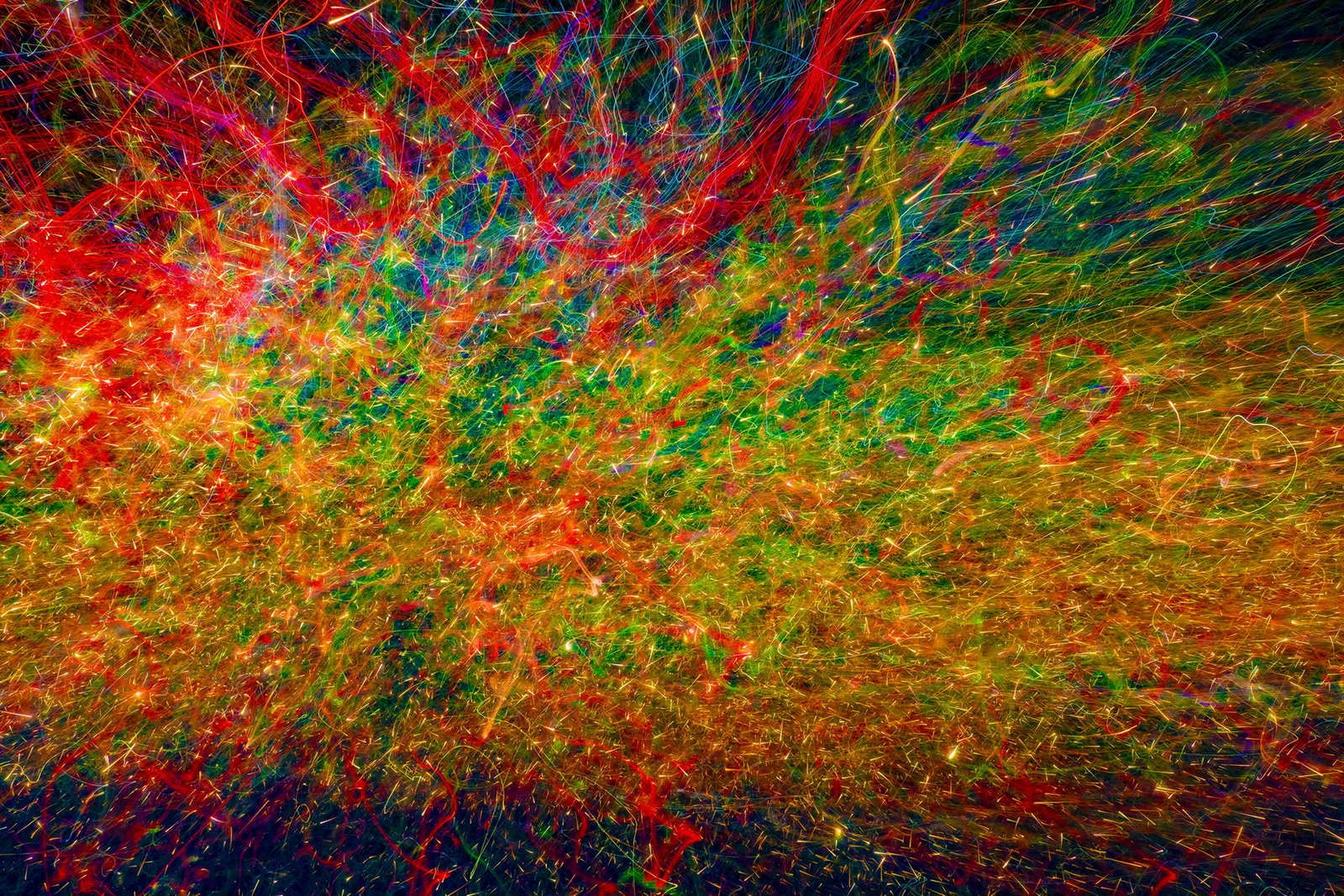
NAPEX 233053, 2023 Mario Amura 240×160 cm Fine art print
“Napoli Explosion è un’opera autobiografica, un inno della città di Napoli a se stessa.”
“Napoli Explosion is an autobiographical word,an hymn that Naples sings to itself. ”
Salvatore Settis
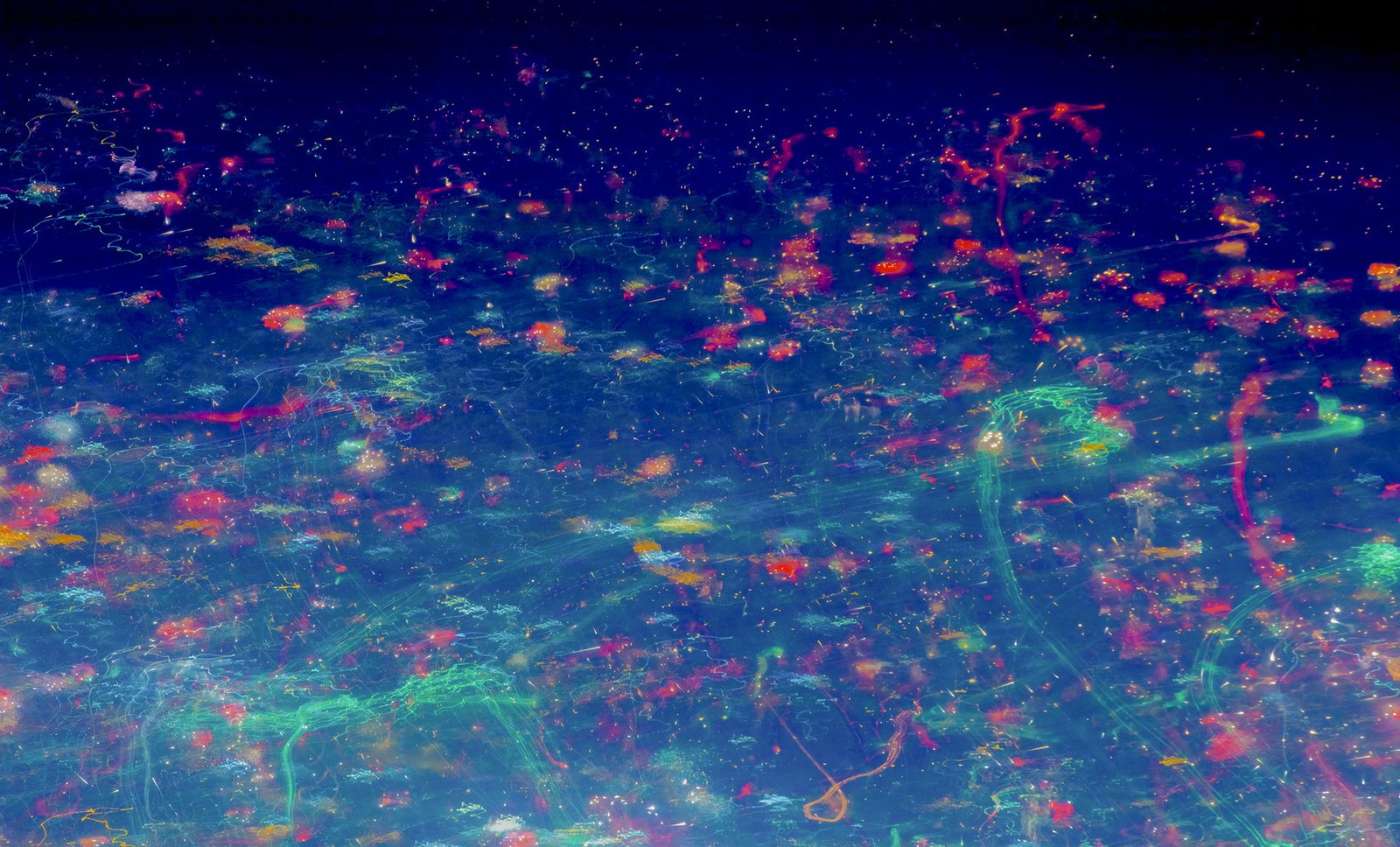
La mostra Oplonti Interactive Experience presenta 17 opere di grandi dimensioni del fotografo Mario Amura che nel progetto sviuppato in oltre 13 anni “Napoli Explosion” ha immortalato in veri e propri dipinti fotografici la festa di fuochi d’artificio che il popolo vesuviano inscena attorno al Vesuvio nella notte di Capodanno. “I vesuviani esorcizzano la paura che il vulcano esploda, facendo esplodere di luce e colori tutto il golfo di Napoli” dice Mario Amura: “Ogni anno, il 31 dicembre, salgo con una troupe formata da alcuni dei miei amici più cari sul Monte Faito, Da lì catturiamo questa sorta di esorcismo contro le forze inumane del vulcano, del destino. Il risultato, pur essendo, di fatto, un’opera di reportage fotografico è straordinariamente pittorico: i fuochi d’artificio diventano nebulose, animali, paesaggi stellari.”
The exhibition Oplonti Interactive Experience presents seventeen large-scale works by photographer Mario Amura. In Napoli Explosion—a project developed over more than thirteen years—Amura transforms the New Year’s Eve fireworks ritual staged by the people of Naples around Mount Vesuvius into veritable photographic paintings. “Vesuvians exorcize the fear that the volcano might erupt by making the entire Gulf of Naples explode with light and color,” says Mario Amura. “Every year, on 31 December, I climb Mount Faito with a crew of some of my dearest friends—a ridge overlooking the Gulf of Naples, directly facing Mount Vesuvius. From there we capture a kind of exorcism against the non-human forces of the volcano, of fate. The result, though conceived as photographic reportage, is extraordinarily painterly: the fireworks become nebulae, animals, stellar landscapes.”
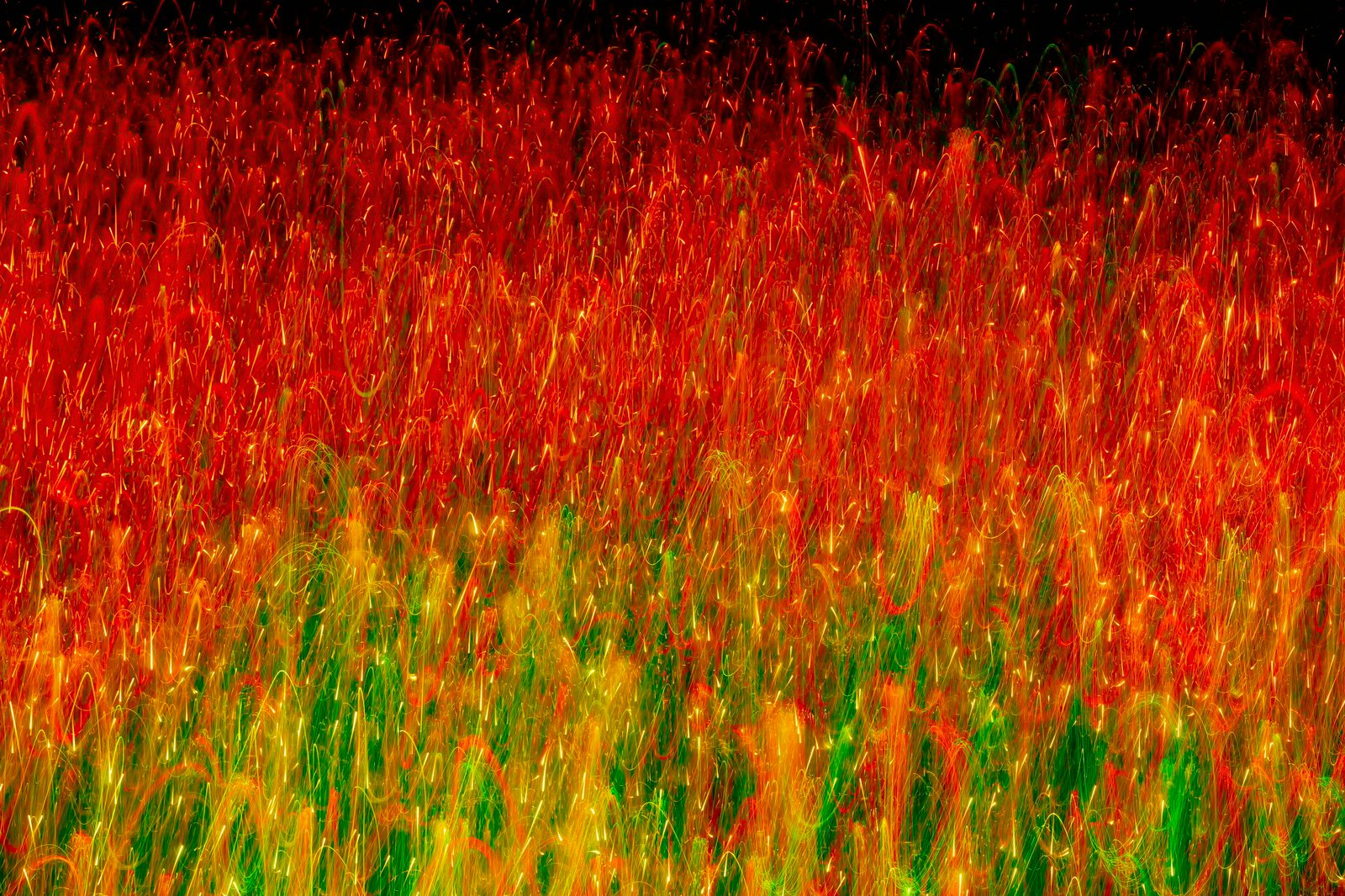
NAPEX 24205, 2020 Mario Amura 225×150 cm Lightbox
Intervista a Mario Amura a cura di Sylvain Bellenger
Interview with Mario Amura, conducted by Sylvain Bellenger
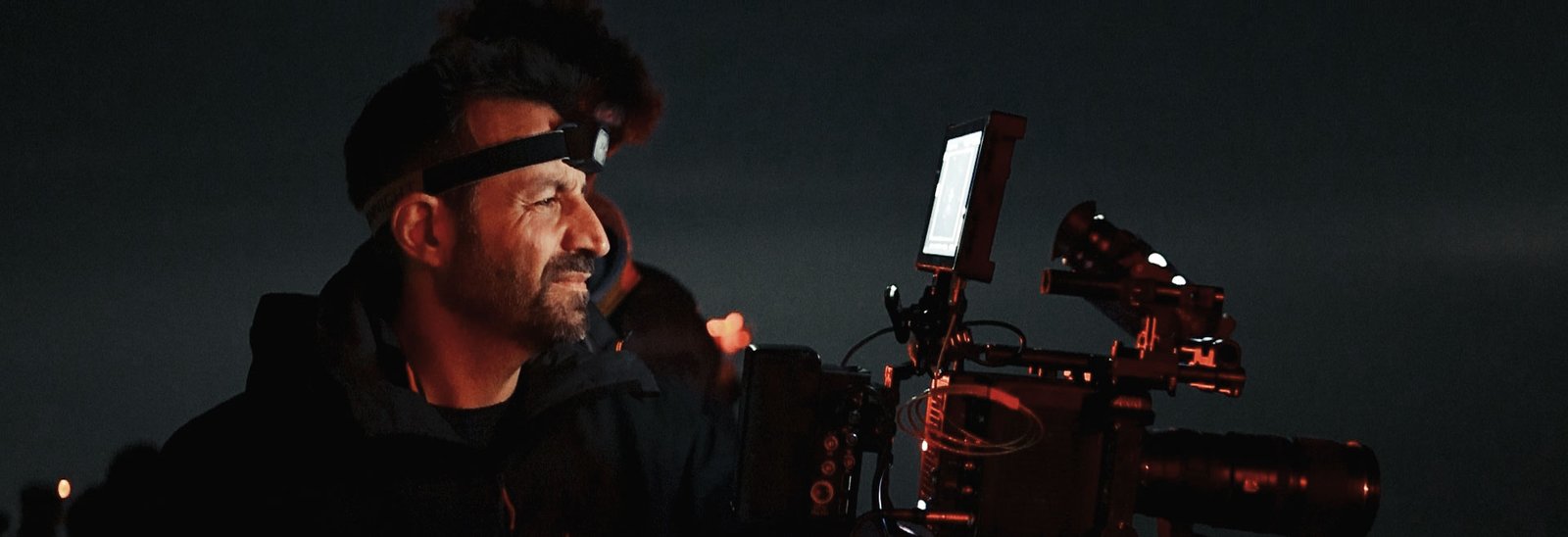
Quando ha inizio il progetto Napoli Explosion? Quale è la sua origine?
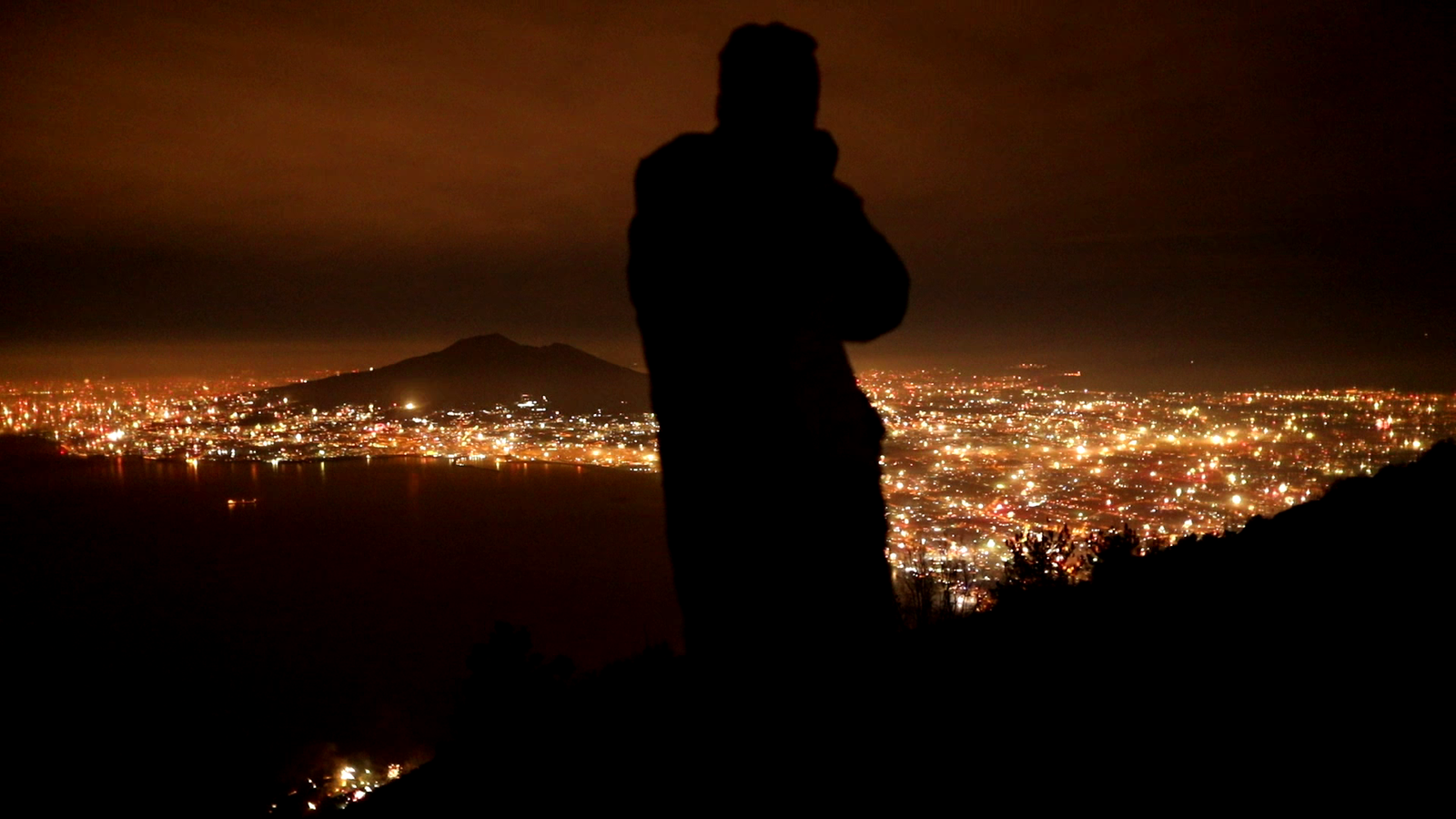
Ho vissuto fino ai 18 anni a Torre Annunziata. La finestra della mia camera da letto affacciava sul Vesuvio e ogni mattino, con riguardo, gli sussurravo il buongiorno come si fa rivolgendosi a chi, assopito, temi di risvegliare. Il vulcano è una presenza viva per chiunque abiti alle sue pendici. Nel 2006 mi è capitato di festeggiare il Capodanno sulle alture del vulcano, tra i pini del versante che guarda verso Napoli. Assistere all’euforia di botti e fuochi di artificio allo scoccare della mezzanotte, mentre avvertivo sotto i piedi il calore, l’energia della camera magmatica, mi ha fatto sentire che doveva esserci un legame tra quelle esplosioni effimere che osservavo dinanzi a me e la paura della popolazione che ad esplodere fosse la potenza sopita del vulcano. È stato nel Capodanno del 2010 che ho assistito per la prima volta ai festeggiamenti dalla cima del Faito, la montagna che si staglia sul golfo di Napoli di fronte al Vesuvio. In quella notte, da quella prospettiva, lo scenario che mi si è aperto dinanzi pareva sovvertire l’iconografia classica delle gouaches o dei capolavori di Turner, Wright, Volaire, Marlow, Warhol: il vulcano in eruzione colorato dalla lava che lo inonda. Il Vesuvio mi appariva, al contrario, come un’ombra silenziosa, immersa in un paesaggio che pareva esplodergli attorno.
When did the Napoli Explosion project come about? What is its origin?
I lived in Torre Annunziata until I was 18. My bedroom window overlooked Vesuvius, and every morning I respectfully whispered to him good morning – as you do when someone is asleep and you fear waking him up. The volcano is a living presence for anyone who lives on its slopes. In 2006, I celebrated New Year’s Eve on the heights of the volcano, among the pines on the side facing Naples. Witnessing – while feeling the heat – the euphoria of explosions and fireworks at the stroke of midnight, the energy of the magma chamber under my feet made me feel there must be a link between those ephemeral explosions I was observing in front of me and the people’s fear that the dormant power of the volcano would explode. On New Year’s Eve 2010, I witnessed the celebrations for the first time from the top of Faito, the mountain that stands out on the Gulf of Naples in front of Vesuvius. That night and from that perspective, the scenario that opened up before me seemed to subvert the classic iconography of gouaches or masterpieces by Turner, Wright, Voltaire, Marlow, and Warhol. They depict the erupting volcano coloured by the lava flooding it. Vesuvius appeared as a silent shadow immersed in a landscape that seemed to explode around it.
Quante volte sei tornato a questo rituale, e perché?
Dal 2010 sono tornato sul Faito ogni capodanno. Da quella posizione lo spettacolo mozzafiato di centinaia di migliaia di fuochi d’artificio esplosi in contemporanea confonde la percezione di micro e macrocosmo. Tornarci è divenuta un’ossessione. Nel tempo, inoltre, è come se avessi affinato una sensibilità nell’interpretare lo stato d’animo del popolo vesuviano, nel suo rito propiziatorio di inizio anno: mi sembra quasi di essere in grado di riconoscere i moti di speranza, paura, allegria, rabbia dal modo in cui decidono di sparare botti e fuochi. Un po’ come accade nella commedia Le voci di dentro di Eduardo De Filippo, dove il protagonista Alberto Saporito ha imparato a decifrare quello che gli dice l’anziano Zi’ Nicola, che ha rinunciato alla parola, e si esprime solo sparando mortaretti. Continuo a tornare ogni anno su quella montagna anche per una ragione più intima. Napoli Explosion è un progetto fotografico del quale mio padre era particolarmente innamorato. Da quando se ne è andato, torno a questo rituale per riallacciare il filo del dialogo con lui.
How many times have you gone back to this ritual, and why?
I have been up the Faito every New Year’s Eve since 2010. From that position, the breathtaking spectacle of hundreds of thousands of fireworks exploding at the same time confuses the perception of microcosm and macrocosm. Returning there has become an obsession. Over time, it is as if I have refined a sensitivity in interpreting the state of mind of the Vesuvian people, in their propitiatory rite at the beginning of the year. It felt as if I could recognise the motions of hope, fear, joy, and anger, according to how they decided to shoot firecrackers and fireworks. It is a little like what happens in the play Le voci di dentro by Eduardo De Filippo where the elderly Zi’ Nicola has given up speaking and expresses himself by shooting firecrackers. The hero of the play, Alberto Saporito, has learned to decode what Zi’ Nicola tells him.
Da quante persone è composto il gruppo-staff che ti segue nelle spedizioni?
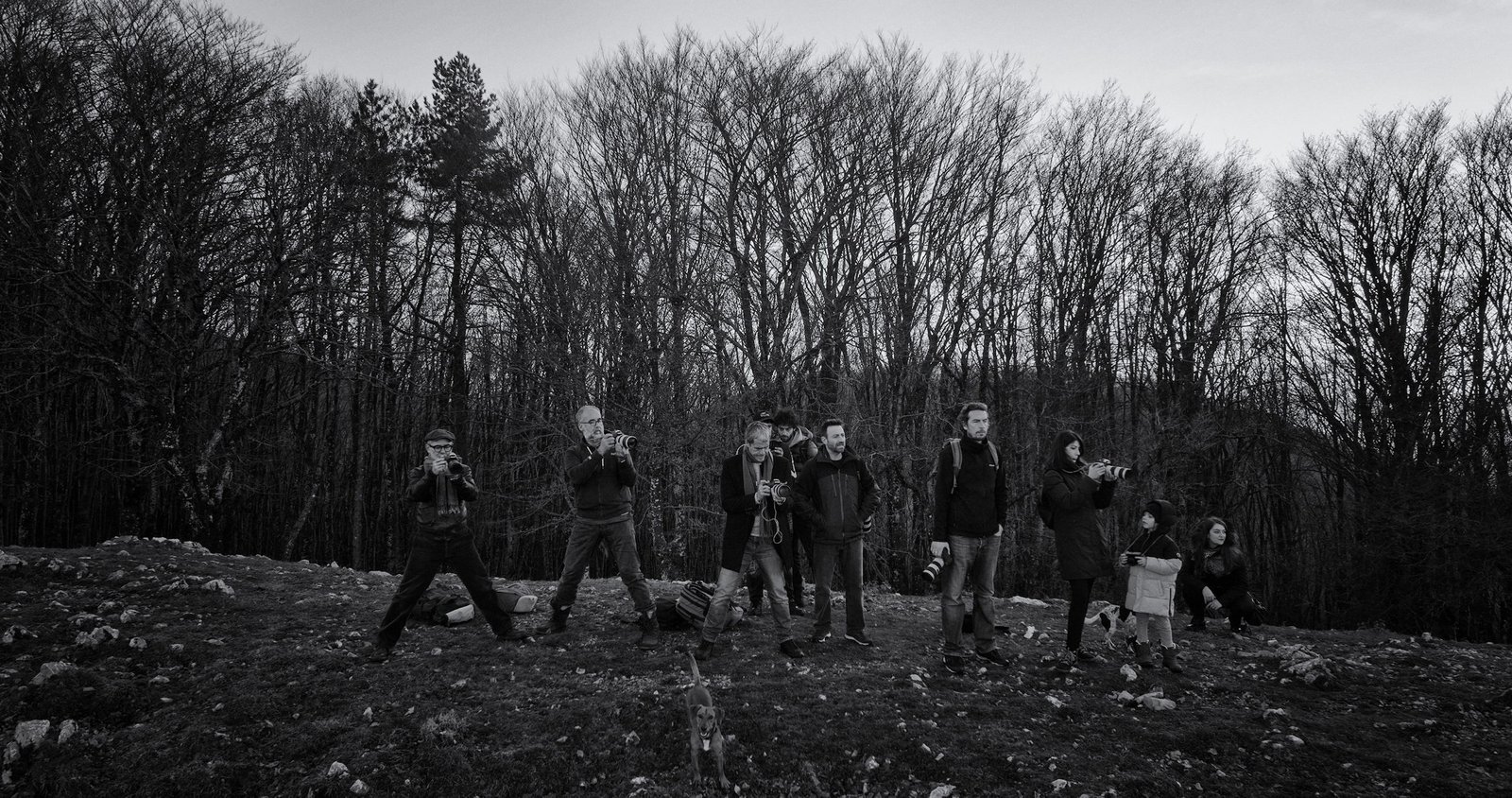
Il team di operatori che sale con me non è formato da fotografi professionisti, ma dalla mia compagna Claudia Ascione e da alcuni dei miei più cari amici che si sono appassionati negli anni al progetto: Christian Arpaia, Serafino Murri, Gennaro Santamaria e Maurizio Valsania. Serenella Iovino ci supporta e intanto raccoglie memorie. Il team produzione è coordinato da Raffaele Losco, alla logistica Carla Santamaria. Ci sono stati poi molti, che negli anni si sono avvicendati nelle spedizioni: Ivan Specchio, Elisa Angelelli, Marco Rambaldi, Marco Ricci, Maria Eugenia D’Andrea, Armando Serrano. Una volta scesi, c’è un altro gruppo di lavoro che contribuisce allo sviluppo del progetto formato da Mario Nucibello, Cristina Ascione ed Angelo Faella.
How many people are in the staff group that follow you on your expeditions?
The team of operators who ascend with me are not professional photographers. They are my partner Claudia Ascione and some of my dearest friends who have become passionate about the project over the years: Christian Arpaia, Serafino Murri, Gennaro Santamaria and Maurizio Valsania, while Serenella Iovino supports us and collects memories. The production team is coordinated by Raffaele Losco, and Carla Santamaria is in charge of logistics. There have also been many others who have joined the expeditions over the years: Ivan Specchio, Elisa Angelelli, Marco Rambaldi, Marco Ricci, Maria Eugenia D’Andrea and Armando Serrano. Once we had descended, another working group contributed to the development of the project comprising Mario Nucibello, Cristina Ascione and Angelo Faella.
Che obiettivo ora ha il tuo progetto? Fin dall’inizio ti era chiara la finalità e il risultato formale?
Sin dal principio, ho tentato di raccontare il legame tra napoletani e Vesuvio in contrappasso, immortalando la città che esplode mentre il vulcano tace. Ho negli anni assecondato una ricerca ossessiva di un’icona del Vesuvio che non fosse stereotipata, già vista, magari una visione che disarcionasse lo sguardo dalle attese. L’immagine della silhouette nera, silenziosa del vulcano sommerso dal baccano di colori dei fuochi d’artificio mi è parsa una rappresentazione che andava ricercata seriamente e per molte strade diverse tra loro. Le uniche certezze sono state i due limiti che mi sono imposto dal principio, e che hanno definito il campo d’azione. Il primo è stato rispettare in postproduzione digitale i principi del reportage fotografico, limitando l’intervento a quanto, un tempo, era possibile ottenere in camera oscura. Rispettare quanto si è raccolto in fase di scatto “dal vero” offre l’ebbrezza unica di esprimersi attraverso qualcosa che prescinde dal sé: fissare in un’immagine ciò che avviene in autonomia estraendolo semplicemente dal continuum temporale. L’unica scelta, certo determinante, con cui il fotografo di reportage interpreta la realtà, è nello stabilire il suo punto di vista. Ed è proprio riguardo al punto di vista che mi sono posto il secondo limite: fotografare sempre dallo stesso punto di osservazione, dalla cima del Monte Faito. L’esperienza concreta di ripresa di Napoli Explosion, d’altronde, si risolve in pochi minuti l’anno: i minuti che vanno dalla mezzanotte fino a mezzanotte e quindici. Non cambiare punto di osservazione, mi ha permesso di regolare il tiro in base allo studio, durante il resto dell’anno, dei risultati delle spedizioni precedenti. Negli anni, il processo creativo si è poi spinto oltre la rappresentazione della realtà, alla ricerca di nuove frontiere o nuove affinità tra fotografia e pittura. Il progetto, partito cercando di catturare un’immagine diversa del Vesuvio, si è evoluto in una sperimentazione di nuove forme di scrittura con la luce, utilizzando una tavolozza di colore unica fornita dalle centinaia di migliaia di fuochi esplosi in contemporanea. Napoli Explosion è divenuta un’opera alla ricerca del sentimento della luce.
What is the goal of your project now? Were you clear about the purpose and the formal result from the beginning?
Right from the start, I tried to show the link between Neapolitans and Vesuvius through contrast, immortalising the city exploding while the volcano is silent. Over the years, I have indulged in an obsessive search for an icon of Vesuvius that is not stereotyped or hackneyed. I was searching for a vision that would unseat the gaze from expectations. The image of the black, silent silhouette of the volcano flooded by the fireworks’ chromatic tumult seemed a representation that had to be seriously pursued, and in many ways. The only certainties were the two limits I imposed on myself from the beginning, and which defined the field of action. The first was to respect the principles of photographic reportage in digital post-production by limiting the intervention to what, in the past, was possible to obtain in the darkroom. Respecting what has been collected during the shooting phase ‘from life’ offers the unique thrill of expressing yourself through something aside from the self. That means fixing what happens autonomously in an image by simply extracting it from the temporal continuum. The reportage photographer reads reality via a single, decisive choice: determining a point of view. The second limit is about the point of view I have set myself: always shooting from the same vantage point, from the top of Mount Faito. The concrete experience of filming Napoli Explosion is resolved in a few minutes a year: from midnight to 15 minutes past midnight. Leaving my vantage point unchanged has allowed me to adjust the shot according to the analysis of the results of previous expeditions made during the rest of the year. Over the years, the creative process has gone beyond the representation of reality and is in search of new frontiers or new affinities between photography and painting. The project began with trying to capture a different image of Vesuvius and evolved into an experimentation of new forms of writing with light, using a unique colour palette provided by the hundreds of thousands of fireworks that exploded at the same time. Napoli Explosion has become a work in search of the feeling of light.
NAPEX 221037, 2022 Mario Amura 240×160 cm Fine art print
More info